What Is C-Section Delivery?
A C-section delivery, also known as a Caesarean section, is a surgical procedure in which a baby is delivered through incisions made in the mother’s abdomen and uterus. It may be planned before labour or performed during labour when a medical complication makes surgical delivery the safer option for the mother or baby.
A C-section may be recommended for several reasons, including the baby’s position, placental problems, concerns about the baby’s wellbeing or labour that does not progress. However, not every pregnancy requires a Caesarean delivery. The appropriate delivery method depends on the mother’s health, the baby’s condition and the progress of pregnancy.
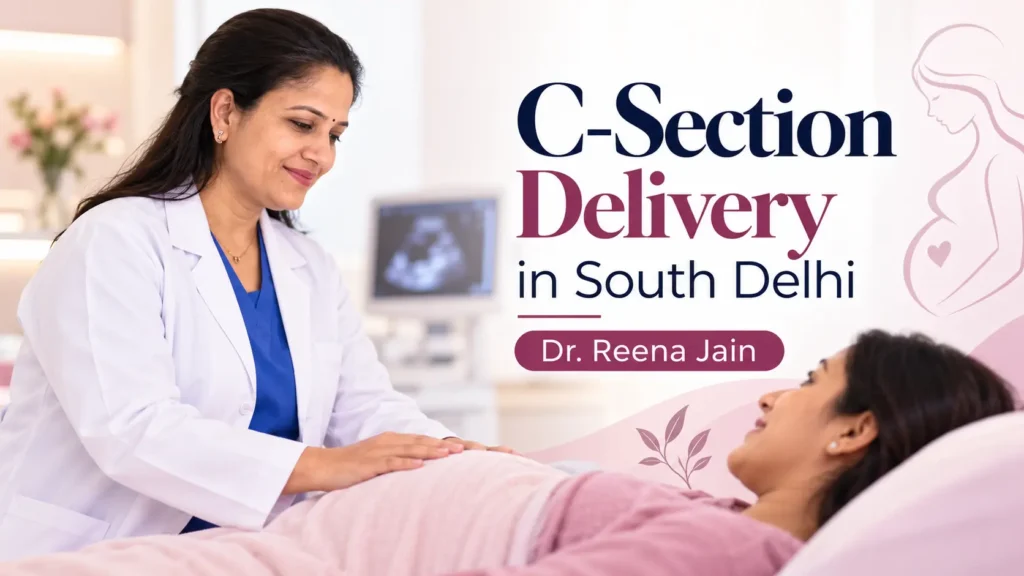
For women looking for C-section delivery consultation in South Delhi, Dr. Reena Jain at Surgical and Maternity Clinic, Malviya Nagar, provides obstetric care and guidance on delivery planning.
Planning your delivery? Contact Dr. Reena Jain to discuss your pregnancy, medical history and available delivery options.
What Are the Reasons for C-Section Delivery?
A doctor may recommend a Caesarean section when vaginal delivery carries additional risks or when surgical delivery is considered safer. Common reasons include:
- Breech presentation: The baby is positioned bottom-first or feet-first instead of head-first.
- Placenta previa: The placenta covers the cervix partially or completely, which can make vaginal delivery unsafe.
- Foetal distress: Concerns about the baby’s heart rate or wellbeing during labour may require prompt delivery.
- Labour that does not progress: Labour may stop progressing despite appropriate medical management.
- Umbilical cord complications: Certain conditions, such as umbilical cord prolapse, may require urgent delivery.
- Multiple pregnancy: Some twin or higher-order pregnancies may require a C-section depending on the babies’ positions and other factors.
- Previous Caesarean delivery: A previous C-section may influence the current delivery plan, although vaginal birth after Caesarean may be possible for some women.
- Maternal health conditions: Certain heart conditions, infections or other medical problems may affect the safest delivery method.
- Placental abruption: Premature separation of the placenta may require urgent assessment and delivery.
- Pregnancy complications: Severe pre-eclampsia and other conditions may require delivery when continuing the pregnancy poses a risk.
Having one of these conditions does not automatically mean that a C-section is necessary. The obstetrician assesses each pregnancy individually before recommending a delivery method.
What Is the Difference Between Planned and Emergency C-Section Delivery?
A Caesarean delivery may be planned in advance or performed unexpectedly when complications arise.
Planned C-section: This is scheduled before labour begins when the doctor determines that a Caesarean delivery is appropriate. It may be recommended for conditions such as placenta previa, certain breech presentations or specific maternal and foetal health concerns. The timing depends on the medical indication, with many uncomplicated planned procedures scheduled at or after 39 weeks.
Emergency C-section: This may be required when an unexpected complication develops during pregnancy or labour. Possible reasons include concerns about the baby’s heart rate, labour that does not progress, significant bleeding or umbilical cord prolapse. The urgency depends on the clinical situation.
An emergency C-section does not necessarily mean that a serious complication will occur. It means the medical team has identified a situation in which an unplanned Caesarean delivery may be needed.
Also Read: High-Risk Pregnancy Care in South Delhi
How Is a C-Section Delivery Performed?
A Caesarean section is performed by a qualified obstetric surgeon in a suitable hospital operating theatre. The procedure generally involves the following steps:
- Preoperative assessment: The medical team reviews the mother’s medical history, pregnancy reports, medications, allergies and relevant test results.
- Anaesthesia: Most C-sections are performed under spinal or epidural anaesthesia, which numbs the lower body while the mother remains awake. General anaesthesia may be needed in certain circumstances.
- Abdominal incision: The surgeon usually makes a horizontal incision in the lower abdomen, depending on the clinical situation and previous surgical history.
- Delivery of the baby: The surgeon opens the uterus and carefully delivers the baby. The newborn is assessed by the medical team.
- Placenta removal and closure: The placenta is removed, bleeding is checked, and the uterine and abdominal incisions are closed.
- Postoperative monitoring: The mother is monitored for pain, bleeding, vital signs and recovery. Breastfeeding and skin-to-skin contact may begin when the mother and baby are medically stable.
A straightforward Caesarean section often takes around 40–60 minutes, although the duration varies depending on the circumstances.
Is C-Section Delivery Safe?
A Caesarean section is a commonly performed surgical procedure and can be lifesaving when vaginal delivery is unsafe. However, like any major operation, it carries potential risks.
Possible complications include:
- Bleeding or the need for a blood transfusion.
- Infection at the surgical site or inside the uterus.
- Blood clots in the legs or lungs.
- Anaesthesia-related complications.
- Rare injury to nearby organs.
- Temporary breathing difficulties in some newborns.
- Placental or uterine-scar complications in future pregnancies.
The likelihood of complications varies according to the mother’s health, the urgency of surgery and other clinical factors. Appropriate medical assessment, surgical care and postoperative monitoring help reduce and manage these risks.
If you are concerned about undergoing a C-section, discuss the benefits, risks and alternatives with your obstetrician before delivery whenever possible.
What Is the Recovery Time After C-Section Delivery?
Recovery after a Caesarean section takes time because the body needs to heal from abdominal and uterine surgery. Many women stay in the hospital for around two to four days, depending on their recovery and hospital practices.
Initial recovery usually takes several weeks, while complete healing of deeper tissues takes longer.
During the first few days, you may experience pain around the incision, tiredness, vaginal bleeding and discomfort while moving. Your medical team may recommend pain relief, gentle movement and measures to reduce the risk of blood clots.
During the following weeks, focus on rest, gradual movement and wound care. Avoid heavy lifting and strenuous activities until your doctor confirms that they are safe. Many women gradually return to normal activities over approximately four to six weeks, although recovery varies.
Contact your doctor promptly if you experience fever, increasing abdominal pain, worsening redness around the incision, pus or heavy vaginal bleeding. Chest pain, breathing difficulty, fainting or one-sided leg swelling with pain require urgent medical assessment.
How to Take Care of Yourself After a C-Section?
Following your doctor’s instructions can support healing and help reduce the risk of complications.
- Care for the incision: Keep the wound clean and follow the recommended dressing and bathing instructions. Do not apply creams or powders unless advised.
- Eat a balanced diet: Include vegetables, fruits, whole grains, protein-rich foods and adequate fluids.
- Move gradually: Gentle walking, when recommended, can improve circulation and support recovery.
- Take prescribed medicines: Follow the recommended dosage and discuss side effects or uncontrolled pain with your doctor.
- Get adequate rest: Accept help with household work and newborn care while you recover.
- Attend follow-up appointments: Your doctor can assess healing, discuss contraception and address concerns about future pregnancies.
- Look after your emotional health: Seek professional support if persistent sadness, anxiety or distress affects your daily life.
Do not stop prescribed medicines or begin supplements and home remedies without medical advice.
C-Section Delivery vs Normal Delivery: What Is the Difference?
Vaginal delivery and Caesarean delivery are two different ways of giving birth. The safest option depends on the mother’s health, the baby’s condition and the circumstances of pregnancy.
| Factor | Vaginal Delivery | C-Section Delivery |
|---|---|---|
| Procedure | Baby passes through the birth canal | Baby is delivered through surgical incisions |
| Surgery | Usually does not involve abdominal surgery | Requires abdominal and uterine surgery |
| Hospital stay | Often shorter after uncomplicated delivery | Often longer due to surgical recovery |
| Recovery | Recovery from labour and childbirth | Recovery includes healing from surgery |
| Main considerations | Labour progress and maternal and foetal wellbeing | Surgical indications and maternal and foetal wellbeing |
Vaginal delivery often involves a shorter recovery when uncomplicated, while a C-section may be the safer option in certain medical situations. Neither method is automatically right for every pregnancy.
Can You Have a Normal Delivery After a Previous C-Section?
Some women may be candidates for vaginal birth after Caesarean (VBAC). Eligibility depends on factors such as the type of uterine incision from the previous operation, the reason for the earlier C-section, the number of previous Caesarean deliveries and the current pregnancy.
VBAC is not suitable for everyone and carries a risk of uterine rupture during labour. If you have had a previous C-section, discuss your delivery options early in pregnancy so your obstetrician can review your medical history and recommend an appropriate plan.
How to Prepare for a Planned C-Section Delivery
Preparing in advance can help you understand the procedure and organise your delivery arrangements.
- Attend scheduled antenatal appointments.
- Discuss why a C-section is recommended and when it may take place.
- Ask about the benefits, risks and alternatives.
- Inform your doctor about medical conditions, allergies and current medicines.
- Follow instructions about fasting and medication before surgery.
- Arrange transport and support for your return home.
- Pack essential items for yourself and your baby.
- Discuss breastfeeding, skin-to-skin contact and newborn care.
- Understand the warning signs that require medical attention after discharge.
If your delivery plan changes unexpectedly, the medical team will explain the reasons and necessary steps when circumstances allow.
C-Section Delivery Consultation in South Delhi
Choosing an obstetrician is an important part of pregnancy care. Expecting mothers often need clear information about delivery options, surgical indications, recovery and the wellbeing of their babies.
Dr. Reena Jain at Surgical and Maternity Clinic, Malviya Nagar, South Delhi, provides obstetric consultations and Caesarean delivery-related care. A consultation can help you understand whether a C-section may be appropriate for your pregnancy, review your previous medical history and discuss delivery planning.
If you have concerns about a planned C-section, a previous Caesarean delivery or complications during pregnancy, professional guidance can help you make informed decisions.
Looking for C-section delivery guidance in South Delhi?
Contact Dr. Reena Jain at Surgical and Maternity Clinic to enquire about an appointment.
Call: +91 90130 22405
Frequently Asked Questions About C-Section Delivery
1. What is a C-section delivery?
A C-section is a surgical procedure in which a baby is delivered through incisions in the mother’s abdomen and uterus. It may be planned before labour or performed when a medical complication requires an unplanned Caesarean delivery.
2. When is a C-section recommended?
A C-section may be recommended for placenta previa, certain breech presentations, concerns about the baby’s wellbeing, labour that does not progress or specific maternal health conditions. The decision depends on the individual pregnancy.
3. How long does it take to recover after a C-section?
Initial recovery takes several weeks. Many women gradually resume normal activities over approximately four to six weeks, but complete healing takes longer and recovery varies between individuals.
4. Is C-section delivery painful?
Anaesthesia is used to prevent pain during the operation. Some pressure or pulling sensations may be felt. Pain and tenderness after surgery are common and can usually be managed with appropriate medical care.
5. How long does a C-section operation take?
A straightforward Caesarean section often takes around 40–60 minutes. The duration may vary depending on the urgency of the procedure and any complications.
6. Can I breastfeed after a C-section?
Yes. Breastfeeding can usually begin when the mother and baby are medically stable. The healthcare team can help with feeding positions that minimise pressure on the incision.
7. How many C-sections can a woman have?
There is no single number that is safe for every woman. The risks of surgical complications and abnormal placental attachment may increase with repeated Caesarean deliveries. Discuss your individual risks with your obstetrician.
8. Can I have a normal delivery after a C-section?
Some women may be eligible for vaginal birth after Caesarean. Suitability depends on the previous uterine incision, pregnancy history, current medical conditions and available hospital support.
9. What precautions should I take after a C-section?
Follow wound-care instructions, take prescribed medicines, walk gently as advised, avoid heavy lifting and attend follow-up appointments. Seek medical attention for fever, worsening wound symptoms, heavy bleeding, chest pain or breathing difficulty.
10. Where can I consult a doctor for C-section delivery in South Delhi?
You can contact Dr. Reena Jain at Surgical and Maternity Clinic in Malviya Nagar, South Delhi, to enquire about obstetric consultations and delivery planning. Call +91 90130 22405 to confirm appointment availability and delivery arrangements.
Conclusion
A Caesarean section can be an important option when medical circumstances make surgical delivery safer for the mother or baby. Understanding the reasons for a C-section, the procedure, recovery and potential risks can help expecting parents make informed decisions.
Regular antenatal check-ups and open communication with your obstetrician are essential for planning delivery according to your medical needs.
For C-section delivery consultation in South Delhi, contact Dr. Reena Jain at Surgical and Maternity Clinic, Malviya Nagar, on +91 90130 22405.